









You Already Know Resolutions Don’t Work. Here’s How to Build Real Momentum for 2026.
If you’ve been training for any length of time, you already know how this goes.
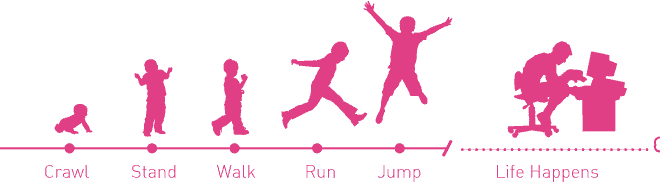
January 1st rolls around, you set some ambitious goals for motivation, grind for a few weeks, and then life happens.
By February, you’ve returned to baseline, wondering where that momentum went.
And you know it’s not just a willpower issue, because you’re doing the work! But you still can’t seem to get out of that same rut.
Why New Year’s Resolutions Crash and Burn
The start of a new year seems, in theory, like the perfect time to set goals for yourself and start working toward those. Without a clear “starting point,” it feels pretty arbitrary to start working on goals.
And you know what? It is arbitrary.
But so are Mondays. Or birthdays. Or the first of June… you get it.
So we all pick this arbitrary date at the start of the year to set huge goals for ourselves.
- This year I’ll lose 60 pounds
- Starting January 1, I’m kicking my iPhone addiction
- This year I’ll finally write that novel I’ve thought about since high school
- By June of this year I’m going to get a handstand push-up.
And we think that, magically, by starting January 1, we’ll be able to accomplish these goals.
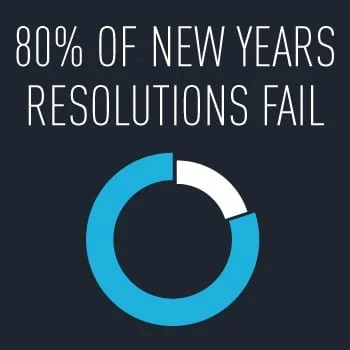
But how well have New Year’s resolutions gone for you in the past? If you’re anything like 80-90% of people, probably not well.
Why is that? How is setting a New Year’s resolution any different from setting goals and building habits?
In theory, there is no difference, and there shouldn’t be.
The way most people do New Year’s, though, is they set resolutions that are too big and they think the first of the year is the secret to conquering that goal. They ignore the signals that the plan is failing, and push through those first 2-6 weeks until they burn themselves out.
Inevitably, when that resolution fails, you’re back to square one. See you next January. Lather, rinse, repeat.
With smart goal setting, though, each step you take will help you get closer to your bigger goals, and you can evaluate when it’s time to make a change to keep moving toward those goals.
And smart goal setting can happen at any time–whether it’s January 1 or April 23.
The Unsexy Secret to Success
 If your training program gets you where you want to go, then it’s doing its job.
Sure, some details may not be optimal.
Certain details can make it easy or difficult to progress.
But those details only tend to make a big difference at the extreme ranges. Most “good” programs will work well in a wide variety of situations.
They may not be perfect, but they’ll get you there.
I really can’t stress this enough. There is no magical program that will cure all your ails and help you reach all your goals.
But most programs (barring those that are dangerous or otherwise very poorly designed) will help you make some progress.
Nothing Matters More Than Your Commitment And Effort
 In this age of hype, where everyone is selling their own distinct product that is “radically unique” and “unlike anything else out there,” it’s crazy to say that most programs are interchangeable, and the only difference is how much a person is willing to stick with it.
But it’s true.
Almost any training program will provide benefits, with different details and approaches to teaching strength and conditioning. We could certainly debate each and every one of those details to no end, though I’m sure you could do a quick Google search and find those discussions already exist…
The point is not that all programs and regimens are equal.
That’s clearly not the case.
Some programs really are better for gaining strength or developing endurance, etc. However, when you start to build the habit of success, the most important part is to keep moving forward.
One step after another string together into great leaps forward.
If you stick with it, that is.
2 Cues to Help You Avoid the Crash
Yes, you should stick with a plan and work it as well as possible to get the most out of it as you can. But this doesn’t mean you are beholden to that regimen forever!
You don’t get bonus points for beating a dead horse.
There are a couple of pitfalls that can sap the consistency in your training. Here are two cues to keep an eye out for. If you see them, you might want to crank the wheel and try something new.
Cue #1 – Dreading your workouts

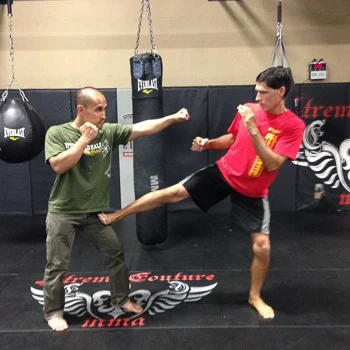
Which one looks more fun?
More than just that little devil on your shoulder telling you that it’d be better to stay on your couch and finish up that bag of chips, you can feel a genuine gut ache when thinking about your training. The kind you feel when your motivation hasn’t just waned, but dropped off the edge of a cliff.
If you have to scream at yourself and do a self-motivational speech that would put college football coaches to shame before every workout, it’s time to switch things around a bit.
Forcing yourself to do something you hate is a recipe for disaster, and you will not be able to stick with that goal.
Cue #2 – Consistently poor performance
 We all have bad days. They just happen, especially when you’ve been training long enough. But when those bad days string together and turn into a bad week or two or three, that is cause for concern.
Good programs have you working toward a particular objective, whether it’s primarily strength, endurance, skill development, or fat loss.
And whether you are aiming for it or not, somewhere in the process there will be peak moment–a spot in the program where everything clicks and you’ve hit a high point.
Some plans actively move toward it, and some just get you there from sheer consistency and effort. And there’s nothing wrong with that.
However, it is very hard to maintain peak condition. And it’s a losing battle to try to stay at that level for as long as you can. In fact, if you fight this too much, it will be hard to recover from the fall off that peak.
If you notice a consistent drop off in performance despite maintaining a good eating plan and sleep pattern, you’ll benefit from moving to another training cycle.
The Bigger Picture Way to Track Your Progress
 Continued progress is the name of the game for both meeting your goals, and for keeping motivated.
When you start feeling that your efforts are being wasted and that you’re just spinning your wheels, that’s the start of quitting altogether.
There may be some solid reasons why you aren’t progressing, but sometimes you’ll have made the necessary adjustments and gotten the most out of them. Is this another indication of the need to switch your training around again?
Maybe, but maybe not.
As you move past the beginner stages of training (let’s say after four months or so), progress often has to be measured on a longer time scale.
Weeks may go by with less than noticeable gains, and that can be frustrating, to say the least. But change may still be happening, just at a pace that is difficult to notice.
Aim for Results, Not Resolutions
 The start of a new year is always a convenient start date to make resolutions of change, but unfortunately the “best laid schemes of mice and men oft go awry.”
So how do you make this year different from the rest?
- Choose a program, any program really, and just do what it says. Get started and keep going. The first few weeks are the hardest, but then you’ll start to make a habit of it.
- Once the habit forms and you get past those immediate improvements, you can then can begin to analyze if you need to move on.
- Keep in mind that true progress can still be happening even when changes are harder to see.
Expect the plateaus, anticipate those periods where you are just plugging along and doing the work but nothing seems to be happening.
Seemingly no gains, but also no losses.
These periods of time are a good way to readjust your expectations and continue to cultivate the habit of exercise without external goals.
You’re doing it because you want to, not because you have to. That’s when you know the “resolutions” are finally here to stay.
Set yourself up for success and take that first step. Then keep going.
Build Your Momentum for 2026
Every January, we offer a course called Momentum: four weeks of guided movement exploration with our coaching team and a focused community of people working on the same things you are.
You’ll spend 15-45 minutes each day on interesting movement patterns, get feedback when you need it, and finish with a clear sense of what to work on next.
Kickstart Your Progress
Momentum is a sane way to start your year with structure and support, focused on sustainable progress you can build on.
Dates TBA soon